If you are responsible for other people—as a parent, a manager, a teacher, a pastor, the friend everyone calls—you know the particular loneliness of it. You have to stand in front of them and be steady, and you know exactly how unsteady you are. Every leadership book promises to close that gap. This piece is about a man who never closed it, and led anyway.
Jesus called Peter the rock. Five verses later he called him Satan. That is not a scandal in Peter’s story; it is the shape of it. He is handed the keys of the kingdom and immediately tries to talk Jesus out of the cross. He becomes the most visible leader of the early church and has to be taught, by a vision of a picnic blanket, that the people he was raised to avoid belong at the table. He is one of the three “pillars” of the movement and gets told off in front of everyone by the newcomer. And the last thing the Bible says about his future is that someone else will lead him where he does not want to go.
Five paintings follow five movements: taking on more than you can carry, being corrected right after being praised, being taught in public, being called out by a peer, and an ending without a halo. The thread is not how to become the kind of leader who never needs correcting. It is how to be corrected and stay. (If this is new to you: Visio Divina, Latin for “divine seeing,” just means praying with a picture instead of a passage. Look first; read second.)
The Keys Are Bigger Than the Man
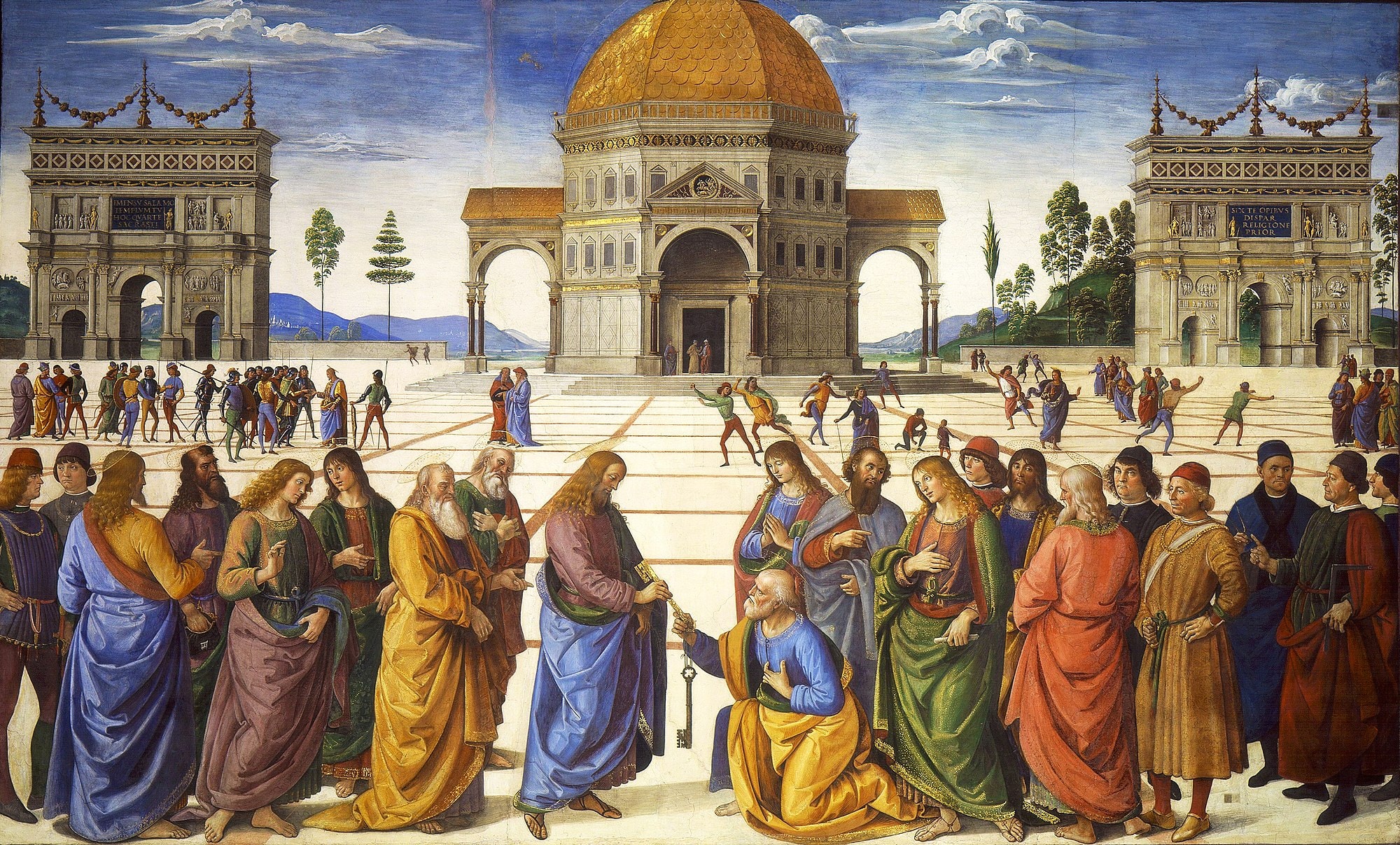
I will give you the keys of the kingdom of heaven. Whatever you bind on earth will be bound in heaven, and whatever you loose on earth will be loosed in heaven.
Matthew 16:19 · BSB
On a road in the far north of the country, Jesus asks his friends who people say he is, and then, “But what about you? Who do you say I am?” Peter answers first: “You are the Christ, the Son of the living God” (Matthew 16:15–16). Jesus calls him blessed, affirms the name that means rock, and promises him keys.
Notice what Peter has not done yet. He has not yet denied anyone, or been to the beach, or seen the sheet come down from heaven. He is given the keys years before he understands what they open. That is the first thing to know about leading: nobody is handed responsibility when they are ready. They are handed it, and then they become ready, slowly, by carrying it.
Perugino painted the handover on the wall of the Sistine Chapel, and he painted the keys huge. In front of a vast paved square, an eight-sided temple, and two Roman arches, Jesus places two keys—one gold, one silver—into Peter’s hand while Peter kneels with his other hand on his chest, looking up with the face of a man checking whether there has been a mistake. Everything in the architecture says permanent, public, official. Everything in the face says not yet. Both are true, and Perugino lets them be.
Christians read “this rock” in different ways, and the guide to Peter’s life sets the main readings side by side. For this piece the point is smaller and more personal: the keys are always bigger than the person holding them. That is not a flaw in the appointment. It is the design.
Visio Divina Prompt: Compare the size of the keys with the size of the hand receiving them. What have you been handed that is bigger than you?
Praised and Corrected in the Same Breath
But Jesus turned and said to Peter, “Get behind Me, Satan! You are a stumbling block to Me. For you do not have in mind the things of God, but the things of men.”
Matthew 16:23 · BSB
What does “Get behind me, Satan” mean?
It means that Peter, without knowing it, had just repeated the tempter’s oldest offer—a kingdom without a cross—and Jesus refused it in the strongest words he had. Here is how fast it happens. Right after the keys, Jesus begins to explain that he must go to Jerusalem, suffer, and be killed. Peter “took Him aside and began to rebuke Him. ‘Far be it from You, Lord! This shall never happen to You!’” (Matthew 16:22). The new rock is correcting the builder. And Jesus turns on him: “Get behind Me, Satan!”
Read carefully, and “Satan” is not a verdict on Peter’s character. It is the name of the suggestion. Jesus rejects the idea and keeps the man; Peter is still the rock in the next chapter. That distinction—throw out the idea, hold on to the person—is the whole art of correcting someone, and Jesus practices it on Peter first.
For anyone who leads, the timing is the lesson. The most dangerous moment is not after a failure; it is right after being right. Peter has just spoken a truth about Jesus, and soon in Matthew’s account he is “protecting” the mission from the very thing it requires. Praise makes us confident, and confidence is exactly when we start editing out the hard part.
One more thing about the words. Behind me is not away from me. It is where a follower walks. Jesus is not sending Peter into exile; he is putting him back in position.
Visio Divina Prompt: Go back to Perugino’s kneeling Peter and imagine the correction that follows. When were you last corrected immediately after being praised—and did you hear it as exile, or as being put back in place?
The Leader Who Had to Be Taught
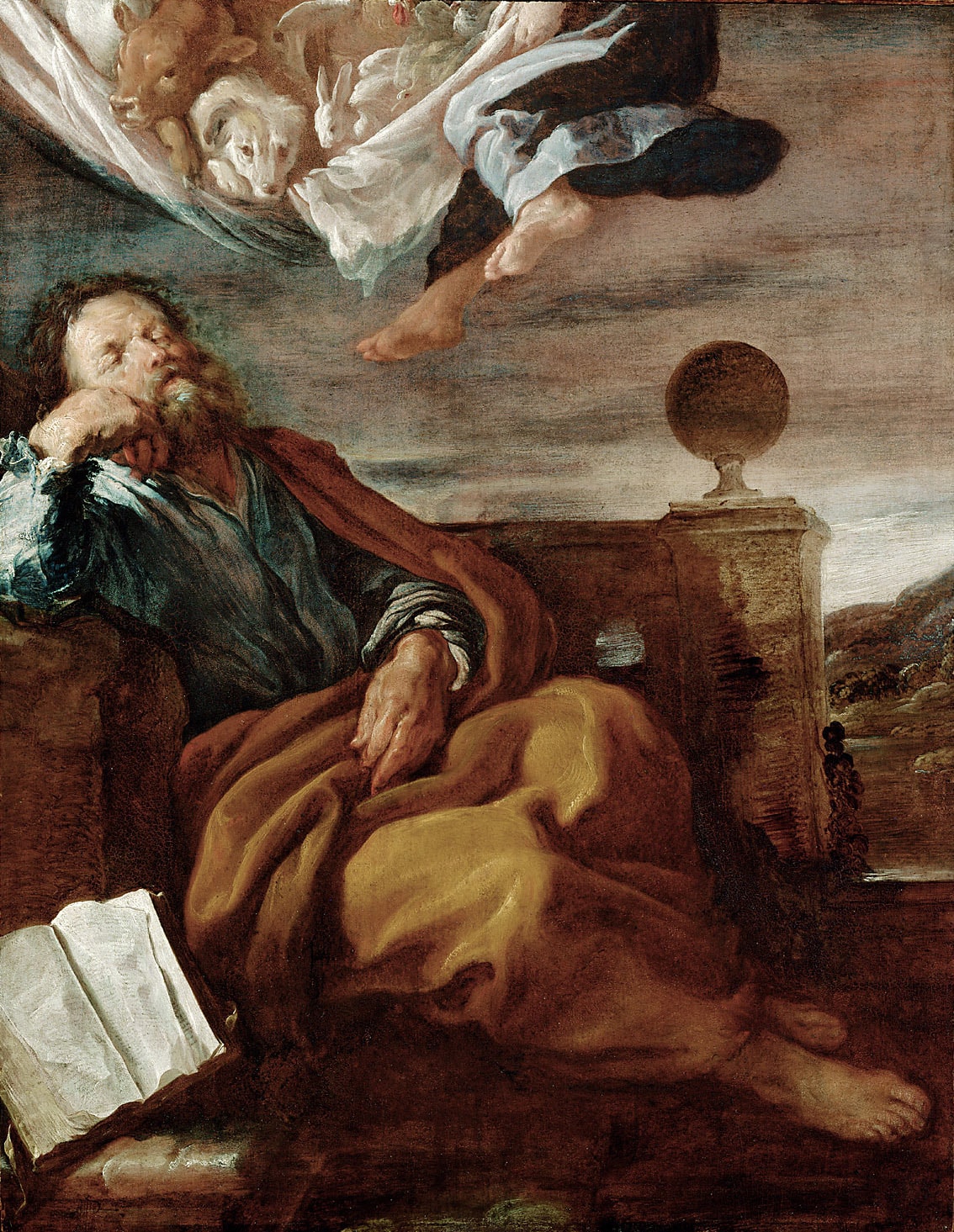
The voice spoke to him a second time: “Do not call anything impure that God has made clean.”
Acts 10:15 · BSB
Years later, Peter is the leader of a growing movement, and he is on a rooftop in the port town of Joppa, hungry, waiting for lunch. He falls into a trance and sees a great sheet let down from heaven by its four corners, full of animals his religion had taught him never to eat. A voice says, “Get up, Peter, kill and eat!” Peter answers with the most Peter sentence in the Bible: “No, Lord!” (Acts 10:13–14). It happens three times—of course it does—and the voice says, “Do not call anything impure that God has made clean.”
Then men arrive at the door from a Roman officer named Cornelius, an outsider by every rule Peter grew up with. Peter goes. When he walks in, Cornelius falls at his feet, and Peter lifts him up: “Stand up. I am only a man myself” (Acts 10:26). And then the sentence the whole book of Acts has been building toward, spoken by the man who argued with the vision: “I now truly understand that God does not show favoritism” (Acts 10:34). The church’s first leader had to be taught—against his own reflexes, by a vision he said no to—that the people he had been avoiding belonged at the table.
Fetti painted the lesson at its least dignified moment. Peter slumps against a stone wall, head propped on his hand, face tilted up, an open book lying at his feet. Above him the sheet descends—a rabbit among the animals crowded into its folds—beside an angel whose bare feet dangle from the clouds. It is funny, and it is tender. Acts says Peter was hungry and waiting for a meal when he “fell into a trance” (Acts 10:10). The most important idea of his career arrives while he is waiting for lunch.
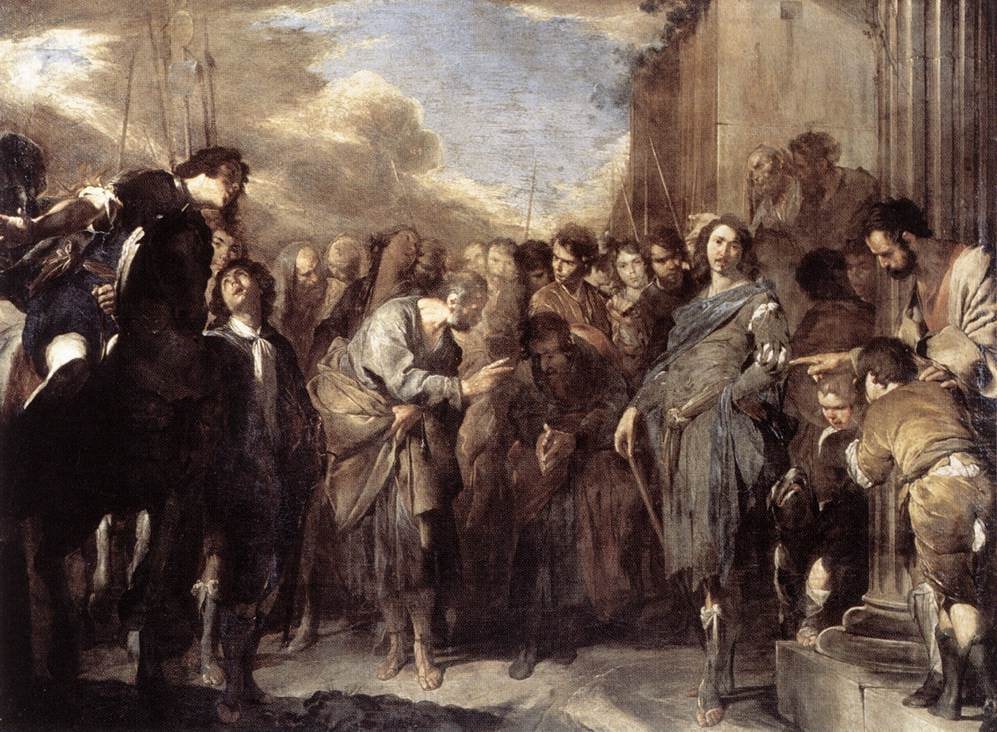
Cavallino paints the meeting in a crowded street, with soldiers, lances, and a dark horse. In the middle of it an old man in a grey cloak—Peter—leans toward a man whose head is bowed, one hand held out between them. Read it with Acts 10:26 in your ear: when Cornelius fell at his feet, “Peter helped him up. ‘Stand up,’ he said, ‘I am only a man myself.’” In the biblical account, Peter refuses to let his authority become a reason for another person to worship him.
There is one more beat, and it is the one leaders skip. When Peter gets back to Jerusalem, the believers there are angry: “You visited uncircumcised men and ate with them” (Acts 11:3). Peter does not pull rank. He “explained to them the whole sequence of events” (11:4), ending with a question: “who was I to hinder the work of God?” (11:17). He changed his mind in public, and then he gave an account of why to the people he led.
That is the third thing: be teachable, especially about who belongs—and when you change your mind, explain yourself. Authority that cannot say “I was taught” is not authority; it is armor.
Visio Divina Prompt: Look at the open book at Peter’s feet, then at the sheet above his head. What have you been so sure of that it would take a dream to move you? Who is waiting at the door?
Called Out by a Peer
When Cephas came to Antioch, however, I opposed him to his face, because he stood condemned.
Galatians 2:11 · BSB
Why did Paul confront Peter?
Because Peter flinched. In the city of Antioch, Paul writes, Peter had been eating freely with non-Jewish believers—living out the lesson of the rooftop. Then a stricter group arrived from Jerusalem, and “he began to draw back and separate himself, for fear of those in the circumcision group” (Galatians 2:12). Others followed his lead; even Barnabas was pulled along. So Paul “opposed him to his face,” and did it “in front of them all” (2:11, 14). The man who learned on the rooftop that no one is unclean backed away from the table under social pressure—the same instinct that had once moved him away from a fire in a courtyard.
Two honesties are worth keeping here. First, the Bible does not tidy this up. Elsewhere Peter is the one arguing for the outsiders—“why do you test God by placing on the necks of the disciples a yoke that neither we nor our fathers have been able to bear?” (Acts 15:10)—and how that meeting relates to the Antioch incident is something scholars still debate. Both are preserved: the inclusive leader and the leader who failed to live up to it. Second, Paul calls him Cephas, the old Aramaic name, and had just called him a pillar of the church (Galatians 2:9). This is not an enemy talking. It is a colleague.
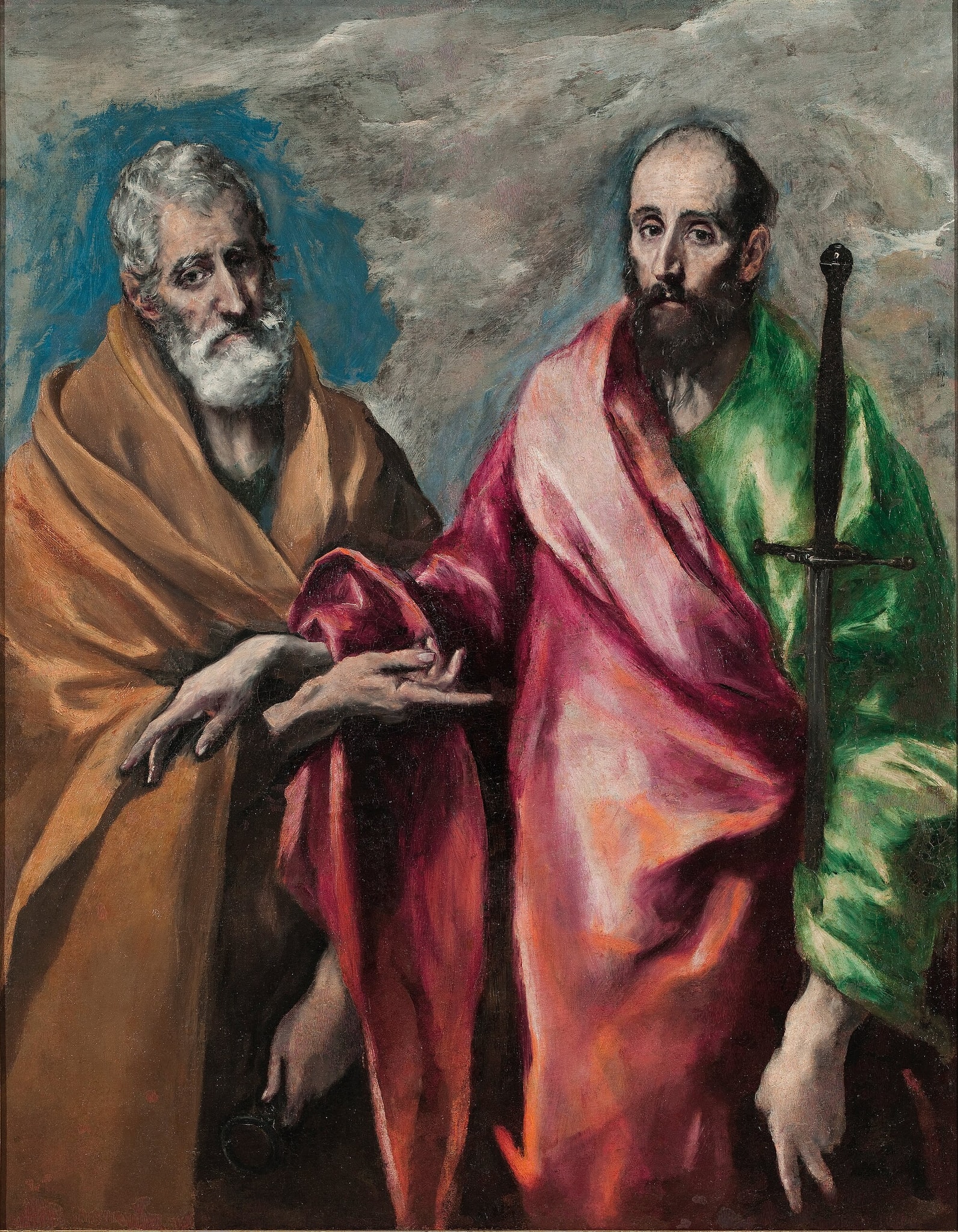
El Greco painted the two of them side by side under a stormy sky—Peter, older, in yellow, looking out past us; Paul in red and green, holding a sword—and put the whole relationship into their hands, which cross at the center of the picture without touching: Peter’s turned palm-up toward Paul, Paul’s reaching across above it. The Barcelona museum that owns the painting reads Peter’s open hand as a gesture of concession. It is a joint portrait, not the argument itself; El Greco is painting two leaders the church kept together without pretending they had always agreed.
That is the fourth thing, and the one that decides whether a leader lasts: take correction from a peer without collapsing and without defending. Collapsing says nothing I did was real. Defending says nothing I did was wrong. Paul does not tell us how Peter responded. The church continued to remember both men as leaders. And the letter that carries his name, written to other leaders, sounds like a man who remembered Antioch: “clothe yourselves with humility toward one another” (1 Peter 5:5). The proverb puts it shorter: “The wounds of a friend are faithful” (Proverbs 27:6).
Visio Divina Prompt: Look at the space between the two hands. Who is allowed to oppose you to your face? If the answer is no one, what would it take to change that?
The Ending Without a Halo
when you are old, you will stretch out your hands, and someone else will dress you and lead you where you do not want to go.
John 21:18 · BSB
The last word Jesus speaks about Peter’s future is about being led. On the beach, after the three questions, he tells him that when he is old, “someone else will dress you and lead you where you do not want to go,” and John adds that this pointed to the kind of death by which Peter would honor God (John 21:18–19). The Bible never narrates that death. Early Christian tradition places it in Rome, on a cross, head down; the guide to Peter’s life sorts out what is Scripture and what is tradition.
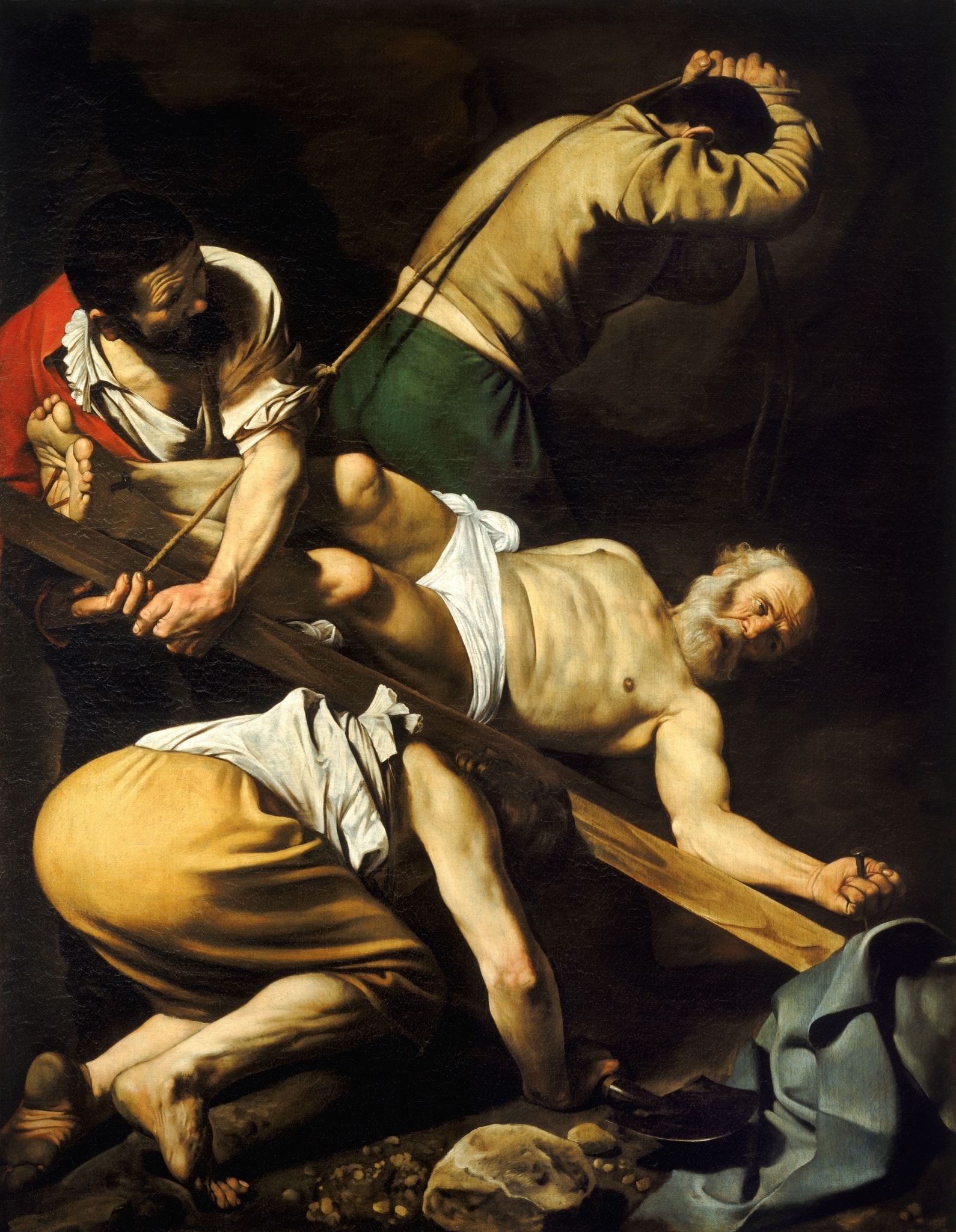
Caravaggio painted the tradition without a single flattering touch. Three workmen strain to raise the cross—one crouching under the timber, one hauling on a rope, one bracing the beam beside Peter’s legs—and Peter, old and grey, lifts and turns his head as the cross goes up. There is no halo, no crowd, no sky. It is an execution carried out by men doing a job, and an old man who, this time, does not run.
Here is the last lesson leadership has to teach, and Peter is the one who teaches it: at the end, you are led. The keys were never yours to keep. And the letter that carries Peter’s name tells the church’s leaders: “Be shepherds of God’s flock … not lording it over those entrusted to you, but being examples to the flock” (1 Peter 5:2–3). From the rock who was called Satan, who argued with a vision, who flinched at Antioch, and who stayed: lead as someone who will one day be led.
Visio Divina Prompt: Look at the workmen’s hands and feet before you look at Peter. Then look at Peter’s eyes. What would it mean to hold your responsibility as something you will one day hand over?
Leadership Without Perfection
Peter’s long second half, read as instructions:
- The keys are bigger than you. That is the design, not the mistake. (Perugino)
- Expect correction right after praise. Being right is when you start editing out the hard part. And “get behind me” is a position, not an exile.
- Be teachable about who belongs, and explain your changes to the people you lead. Authority that cannot say “I was taught” is armor. (Fetti, Cavallino)
- Take a peer’s correction without collapsing or defending. The wounds of a friend are faithful. (El Greco)
- Lead as someone who will one day be led. The authority was never yours to keep. (Caravaggio)
- Write it down for the next ones. “Not lording it over those entrusted to you, but being examples.”
This is the last of five pieces. The morning that made Peter a shepherd is the one before it: Saint Peter and What to Do With a Second Chance. His whole life in paintings, from the first boat to Rome, is in the guide: St. Peter in Art.
A 4-Step Visio Divina Practice for Leaders
Return to whichever painting held you longest. Take a few unhurried minutes to move through these four steps:
- Look (Visio): Stay with one physical detail—the size of the keys, the open book under the sheet, the two hands that almost touch, the nail. Describe what is actually there before you decide what it means.
- Meditate (Meditatio): Name the people you are responsible for. Then name the correction you have been avoiding—from above, from a peer, or from the person at the door.
- Pray (Oratio): Jesus, you called Peter the rock and Satan in the same chapter, and kept him. When I am praised, keep me correctable. When I am corrected, keep me from collapsing and from defending. Teach me who belongs at my table, and when the time comes, teach me to be led. Amen.
- Contemplate (Contemplatio): Rest in silence for one minute. You are not trying to become a better leader. You are practicing being kept.
Stay with the painting
If you want to sit with one of these images a little longer, you can restore it yourself. Open Caravaggio’s Crucifixion of Saint Peter as a puzzle—piece by piece, with the verse waiting at the end. Or get the app for a new painting, a new verse, and a new reflection every morning.
Continue in the open gallery