Luke 2 might be the most-heard chapter in the Bible. It gets read aloud in churches, acted out by children in bathrobes, and recited by Linus in A Charlie Brown Christmas. Which is exactly why it is easy to stop actually hearing it.
So here is the whole chapter in plain language, with twelve paintings — including a 1922 magazine cover, a muddy road in Germany, and an angel that looks like weather. The verses worth remembering are set apart. Fair warning: a few details are probably not what you were told.
What Is Luke 2 About?
Luke 2 tells the birth of Jesus and his childhood: a census that sends Mary and Joseph to Bethlehem, the birth and the manger, the angel and the shepherds, the presentation in the temple where Simeon and Anna recognise the child, and finally a Passover trip when Jesus is twelve and his parents lose him for three days.
Tap any part to jump to it, with the paintings and the verses.
It Starts With Paperwork (Luke 2:1–5)
Luke opens the Christmas story with an emperor and a registration form. Caesar Augustus orders a census of the whole empire; everyone has to register in their own town. Joseph is descended from King David, so he travels from Nazareth to Bethlehem, David's town, with Mary, who is pregnant.
That is the entire setup. No innkeeper yet, no donkey — Luke never mentions one — just two people on a road because a government office said so.
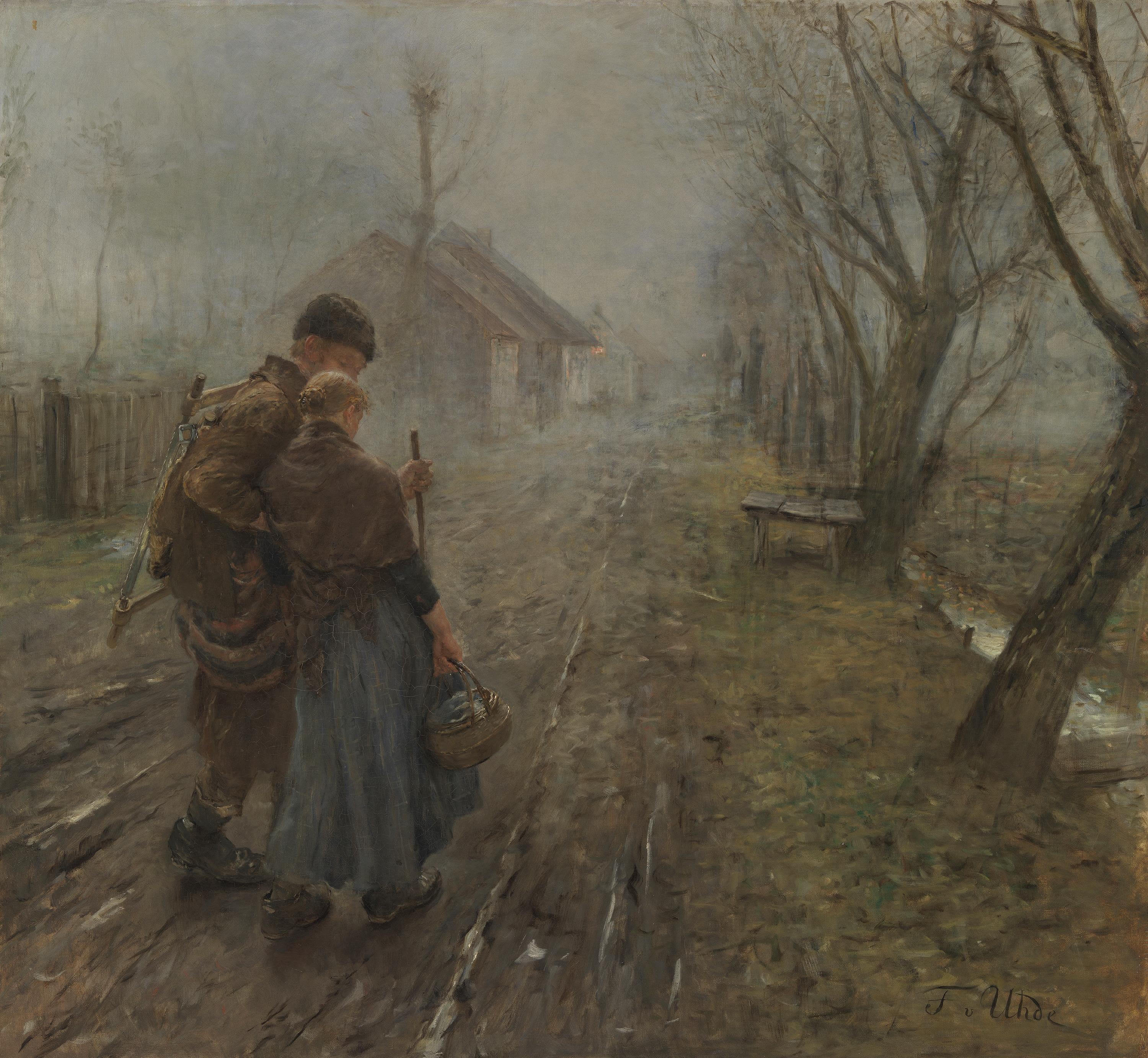
Fritz von Uhde, a German painter who liked setting biblical scenes in the countryside outside his own window, paints them as an ordinary couple.
Nobody in the picture knows anything special is happening. That is the point.
The Birth Gets One Sentence (Luke 2:6–7)
While they were there, the time came for her Child to be born.
Luke 2:6 · BSB
Here is the thing most people never notice. One of the most painted events in Western art gets, in Luke, a single verse:
And she gave birth to her firstborn, a Son. She wrapped Him in swaddling cloths and laid Him in a manger, because there was no room for them in the inn.
Luke 2:7 · BSB
That is all of it. No stable is described. No ox, no donkey, no snow, no drummer boy. A manger, for the record, is a feed trough — the box farm animals eat out of.
Was there really "no room at the inn"?
Probably not an inn as we picture it. The Greek word Luke uses in 2:7 is kataluma, which can mean a guest room or lodging space. That reading fits the way Luke uses the very same word in 22:11 for the upstairs room where the Last Supper happens — and that is clearly a room in somebody's home. When Luke does want to describe a commercial inn, in the story of the Good Samaritan, he reaches for a completely different word, pandocheion.
So the picture is less "cruel innkeeper slams the door" and more "the house was full." Bethlehem was Joseph's family town in the middle of a census. On that reading, the guest room was unavailable, and a young couple may have ended up in the part of a house where animals were kept. It is a smaller, more ordinary kind of no-room — and, if anything, sadder for it.
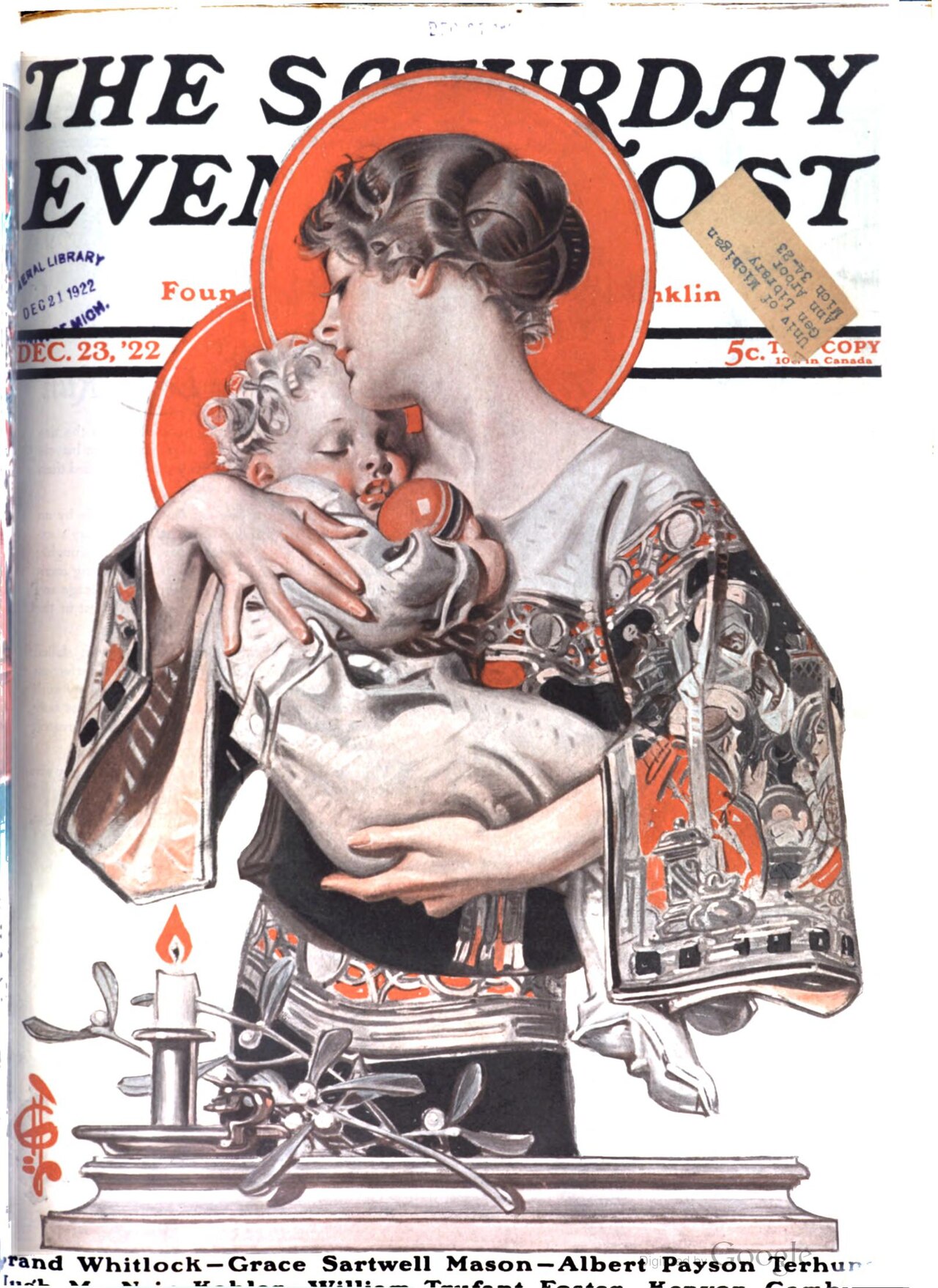
Nobody took "ordinary" further than J. C. Leyendecker. This ran on the cover of The Saturday Evening Post for December 23, 1922. The one thing marking the mother out as a Madonna is the flat orange disc behind her head — a halo, drawn like a piece of graphic design.
It is a Christmas magazine cover. It is also a Madonna and Child, and the joke is that you might not notice for a second.
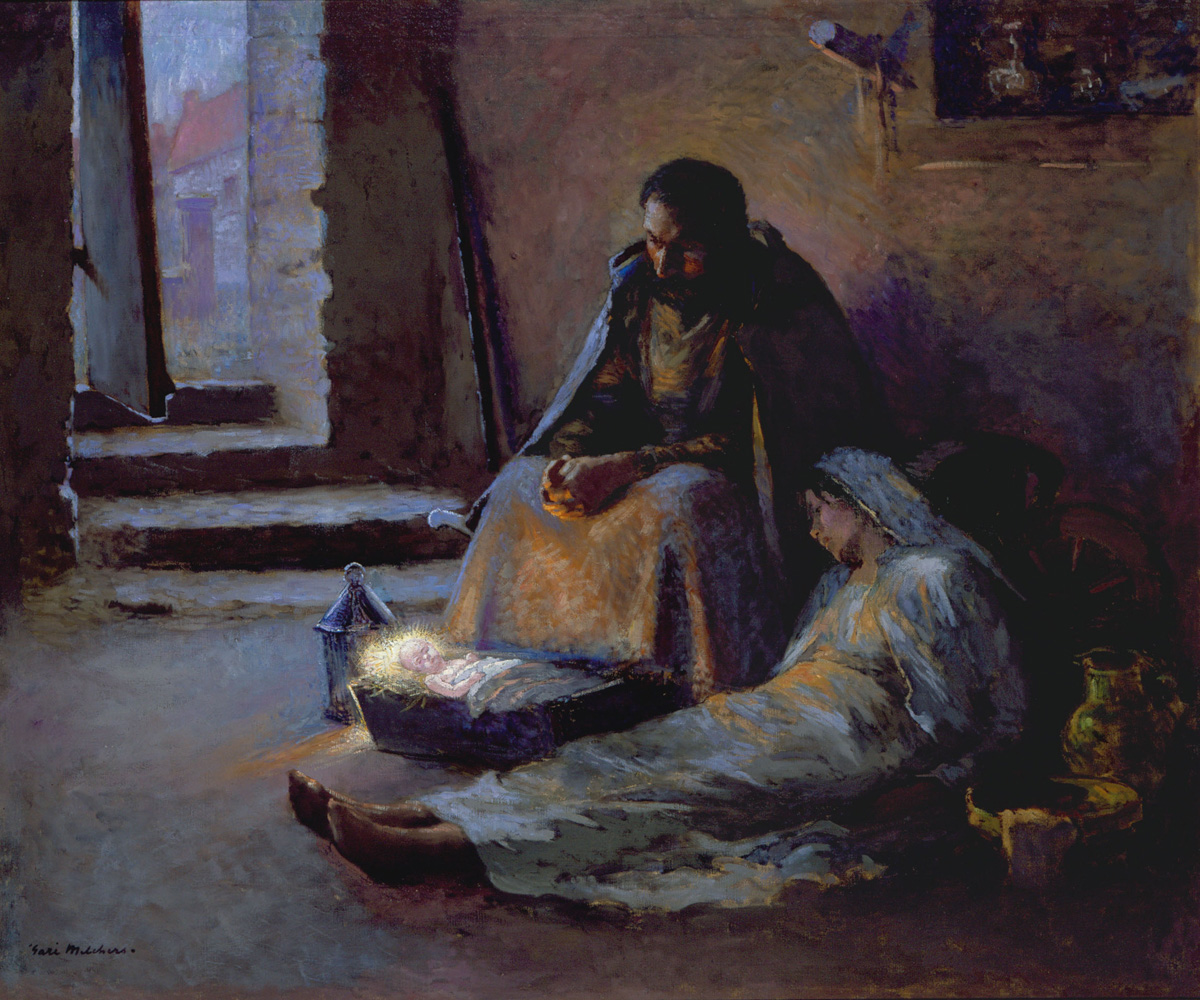
Gari Melchers keeps the ordinariness and turns the lights down. Warm light gathers around the child.
No visitors yet. Just a family, at night.
The Night Shift Gets the News First (Luke 2:8–20)
Meanwhile, outside town, shepherds are working nights.
Just then an angel of the Lord stood before them, and the glory of the Lord shone around them, and they were terrified.
Luke 2:9 · BSB
Why shepherds?
Because Luke keeps doing this. The first people told about the birth are not priests, officials, or anyone with a title — they are outdoor manual labourers on the night shift, who were not in town, and who nobody asked. In Luke's Gospel, the news generally reaches the people at the edges first. He has already had Mary sing about God lifting up the humble (Luke 1:52), and here he simply shows it happening.
“Do not be afraid! For behold, I bring you good news of great joy that will be for all the people: Today in the city of David a Savior has been born to you. He is Christ the Lord!”
Luke 2:10–11 · BSB, excerpt
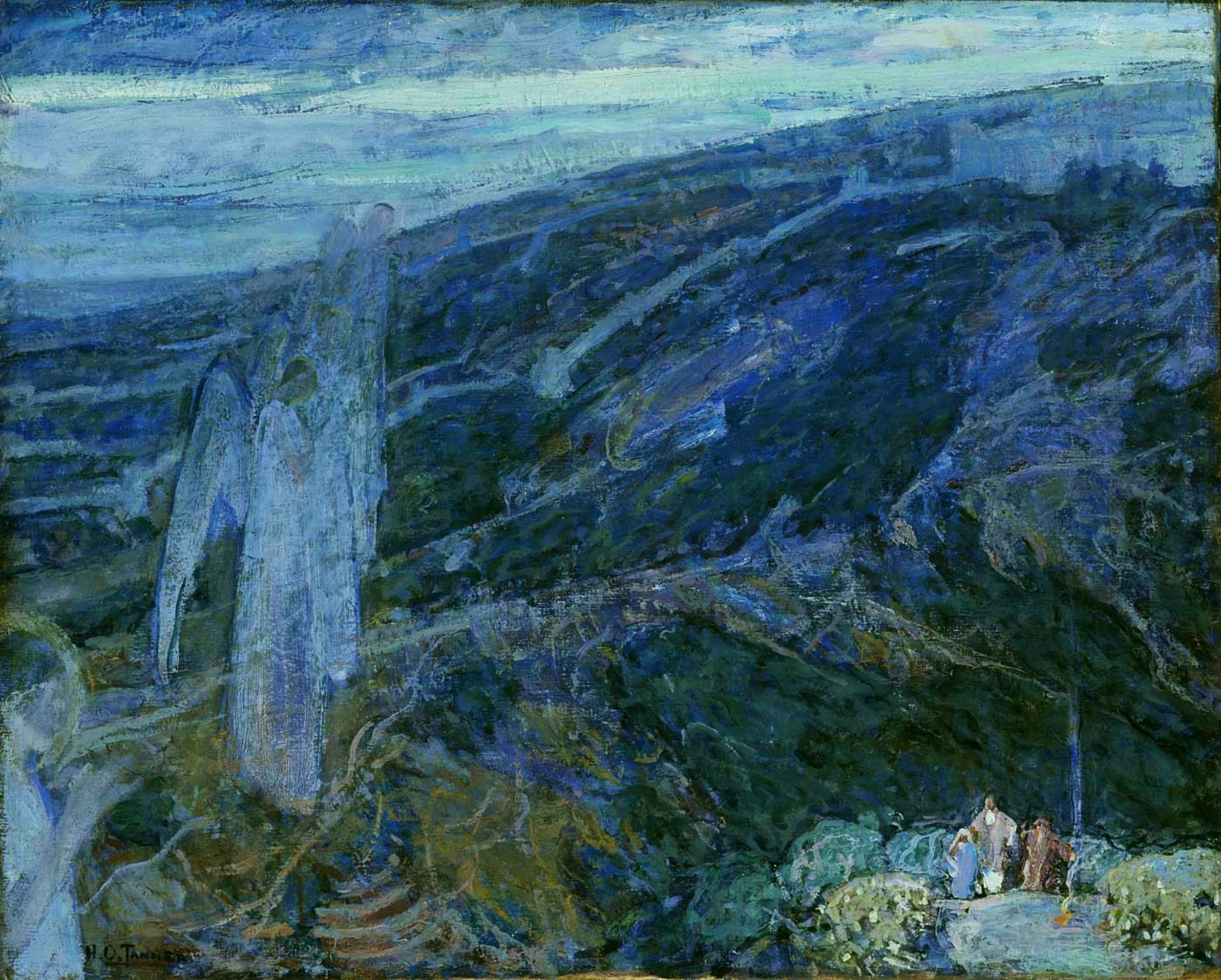
Henry Ossawa Tanner paints this almost entirely in blue, with the angels as translucent figures of light.
Tanner was the first African American painter to win major international recognition, and he spent much of his career in France painting biblical scenes like this one: nearly abstract, mostly weather, the human beings the size of a thumbnail.
Did the angels actually sing?
Luke does not say they sang. Verse 13 says the heavenly host appeared "praising God and saying" — and then comes the famous line. Many carols have them singing it; Luke gives us their words without describing a tune. Nice detail to have in your pocket around a Christmas tree.
While we are here: "heavenly host" is not a choir. Host is a military word — it means an army. What shows up over a field at night is a sky full of troops, and their announcement is peace.
“Glory to God in the highest, and on earth peace to men on whom His favor rests!”
Luke 2:14 · BSB
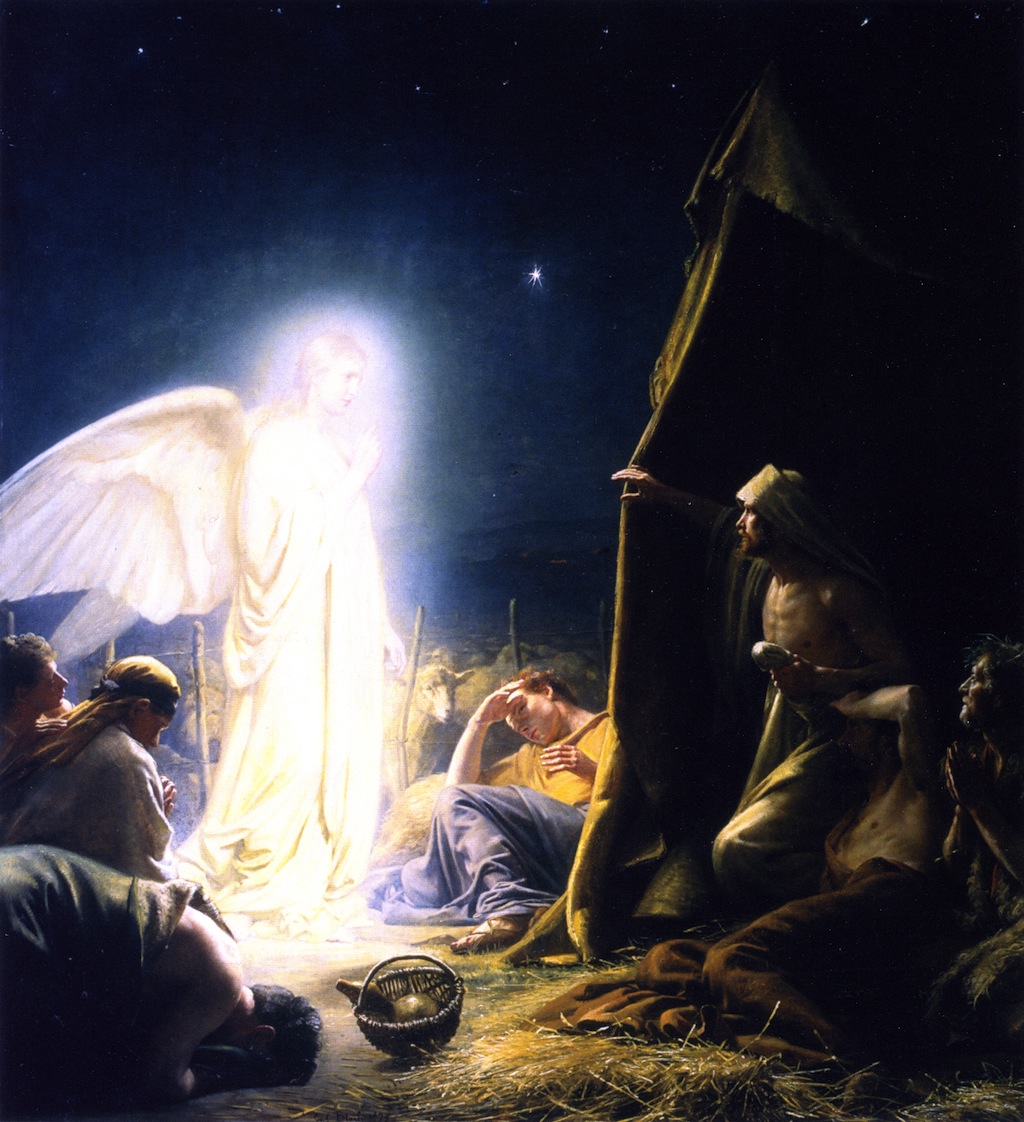
Then the angels leave, and the shepherds do something very human. They decide to go check.
“Let us go to Bethlehem and see this thing that has happened, which the Lord has made known to us.”
Luke 2:15 · BSB, excerpt
What exactly was the sign?
This is my favourite small joke in the chapter. The angel says: here is how you will know.
“And this will be a sign to you: You will find a baby wrapped in swaddling cloths and lying in a manger.”
Luke 2:12 · BSB
Alongside an army of angels and the glory of the Lord blazing across a field, the confirming sign is: a baby, wrapped up, in a feed box. The most ordinary thing imaginable, offered as proof. Luke keeps setting the enormous next to the very small, and he never explains the joke.
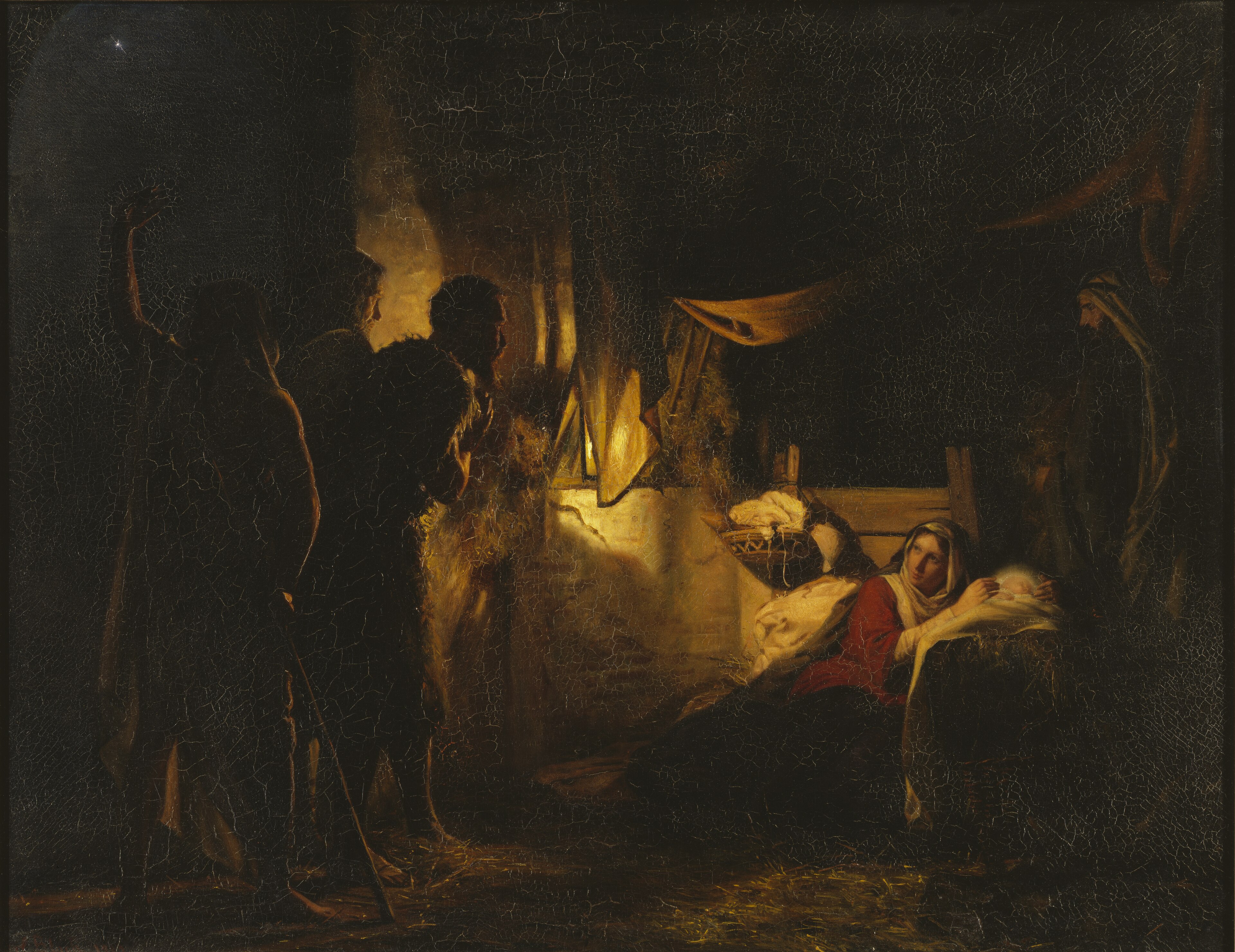
They find it exactly as described, tell everyone, and go back to work "glorifying and praising God" (2:20). And in the middle of all that noise, Luke gives Mary one quiet line:
But Mary treasured up all these things and pondered them in her heart.
Luke 2:19 · BSB
Remember that sentence. It comes back.
Two People Who Had Been Waiting (Luke 2:21–38)
The baby is named Jesus at his circumcision. About forty days after the birth, his parents take him to the temple in Jerusalem to do what the Law required. Luke notes the offering they bring: "A pair of turtledoves or two young pigeons" (2:24). That was the option for families who could not afford a lamb.
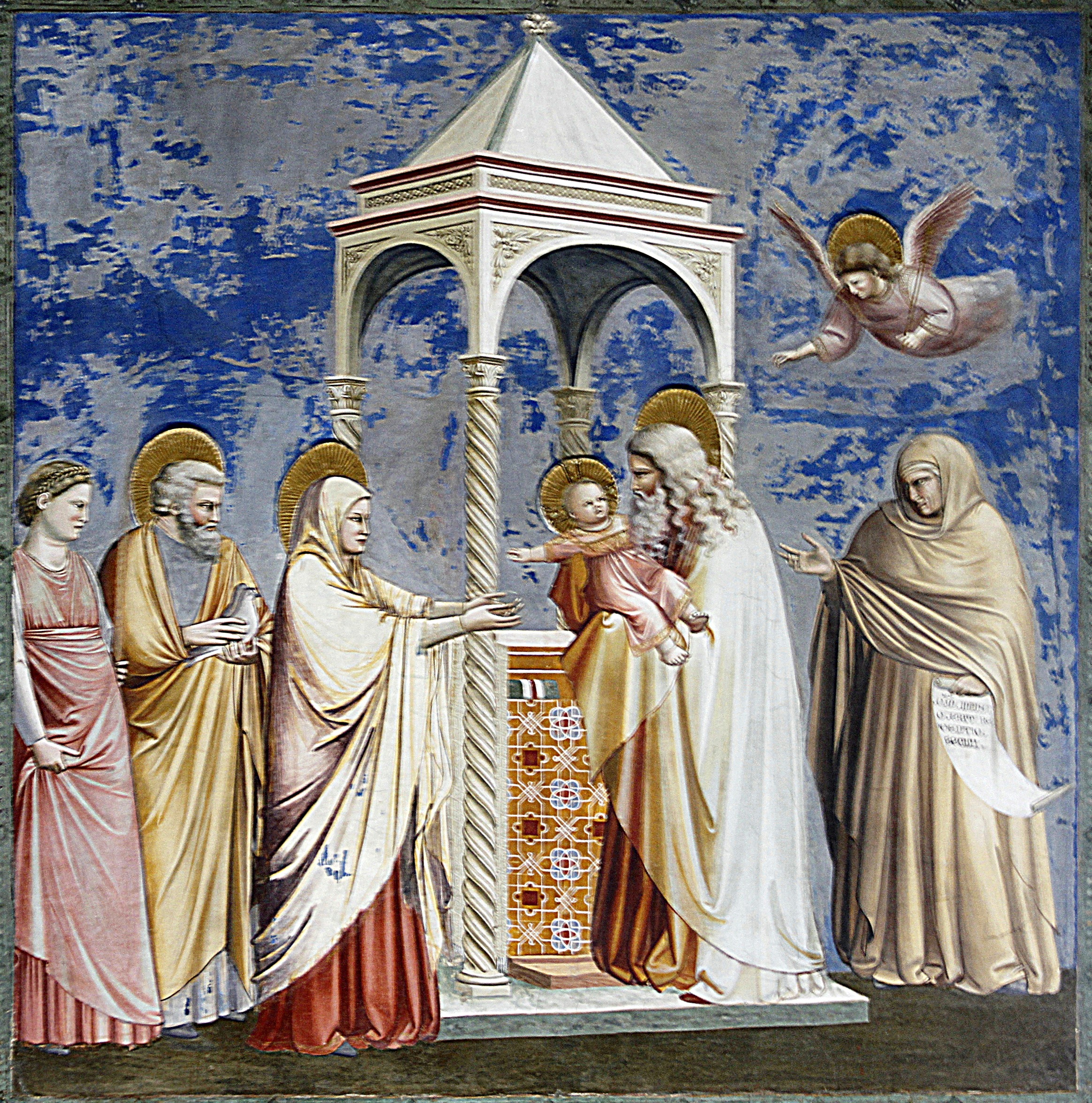
And in the temple, two people are waiting — and they have been waiting a long time.
First Simeon, a man who had been promised he would not die before he saw the Messiah. He takes the baby in his arms and says one of the most contented things anyone says in the whole chapter:
“Sovereign Lord, as You have promised, You now dismiss Your servant in peace. For my eyes have seen Your salvation.”
Luke 2:29–30 · BSB, excerpt
What is the Nunc Dimittis?
It is that song — Simeon's words in Luke 2:29–32 — named after its first two words in Latin, nunc dimittis, "now you dismiss." It has been sung at night prayer in Christian churches for centuries: a text about a servant ready to depart in peace, prayed as the day ends. It is also familiar from Evensong.
Then Simeon turns to Mary, and the mood drops out from under the scene:
“Behold, this Child is appointed to cause the rise and fall of many in Israel, and to be a sign that will be spoken against, so that the thoughts of many hearts will be revealed—and a sword will pierce your soul as well.”
Luke 2:34–35 · BSB, excerpt
Six weeks after the birth, in the middle of a happy ceremony, a stranger tells a young mother that this will cost her. Luke does not soften it and does not explain it. He just leaves it in the chapter, sitting there.
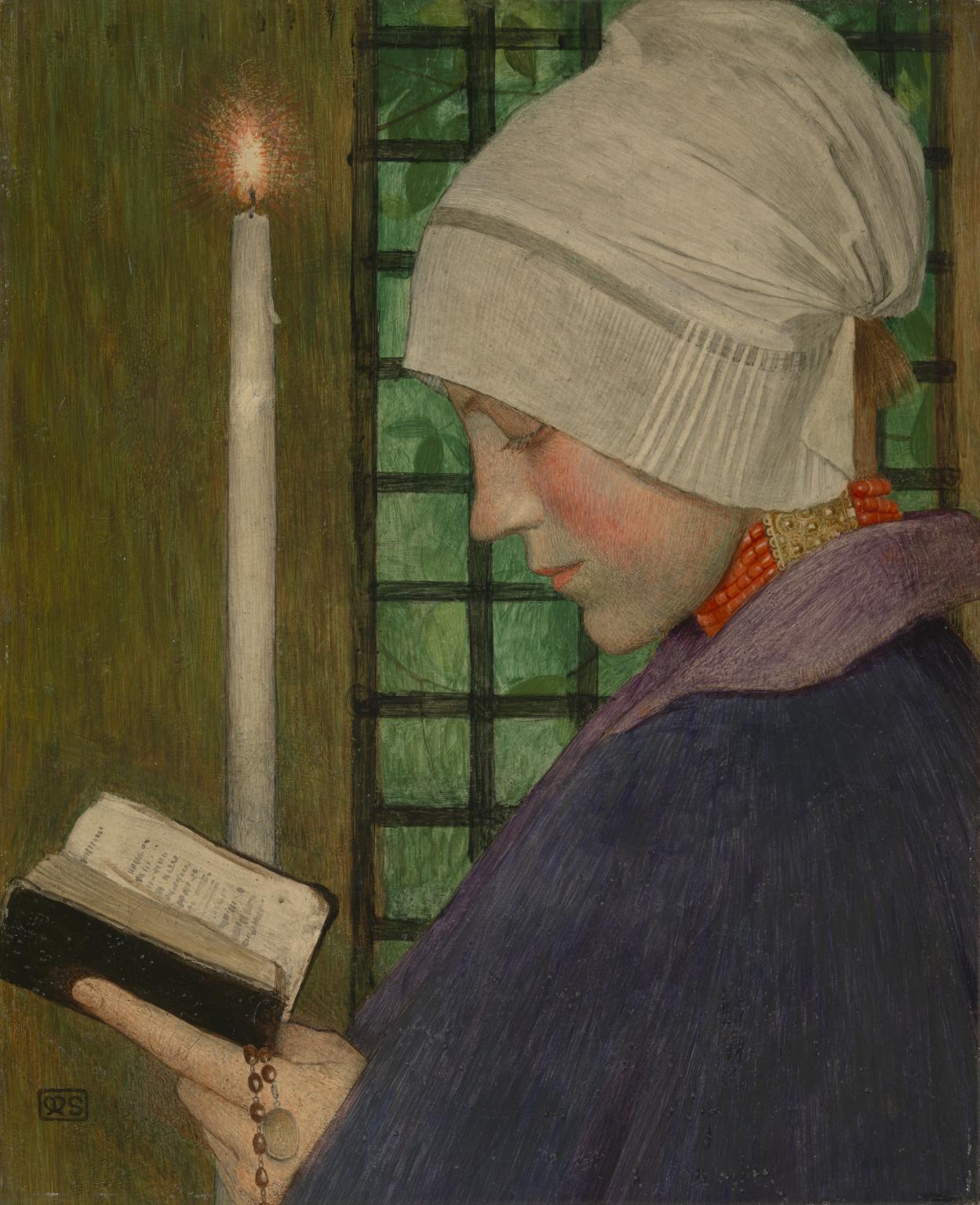
Marianne Stokes’s painting takes its title from the feast that remembers this day — Candlemas, February 2, when churches bless candles because of Simeon's line about "a light for revelation to the Gentiles" (2:32).
It is roughly 125 years old and looks like it could have been printed last year.
Then Anna. Luke gives her a full biography in two verses: a prophetess, daughter of Phanuel, of the tribe of Asher, married seven years, widowed to the age of eighty-four, and she "never left the temple, but worshiped night and day, fasting and praying" (2:37). Then she comes over and starts telling everyone.
A small thing worth noticing: Asher was one of the northern tribes usually counted among the ones lost to history. Luke names it anyway.
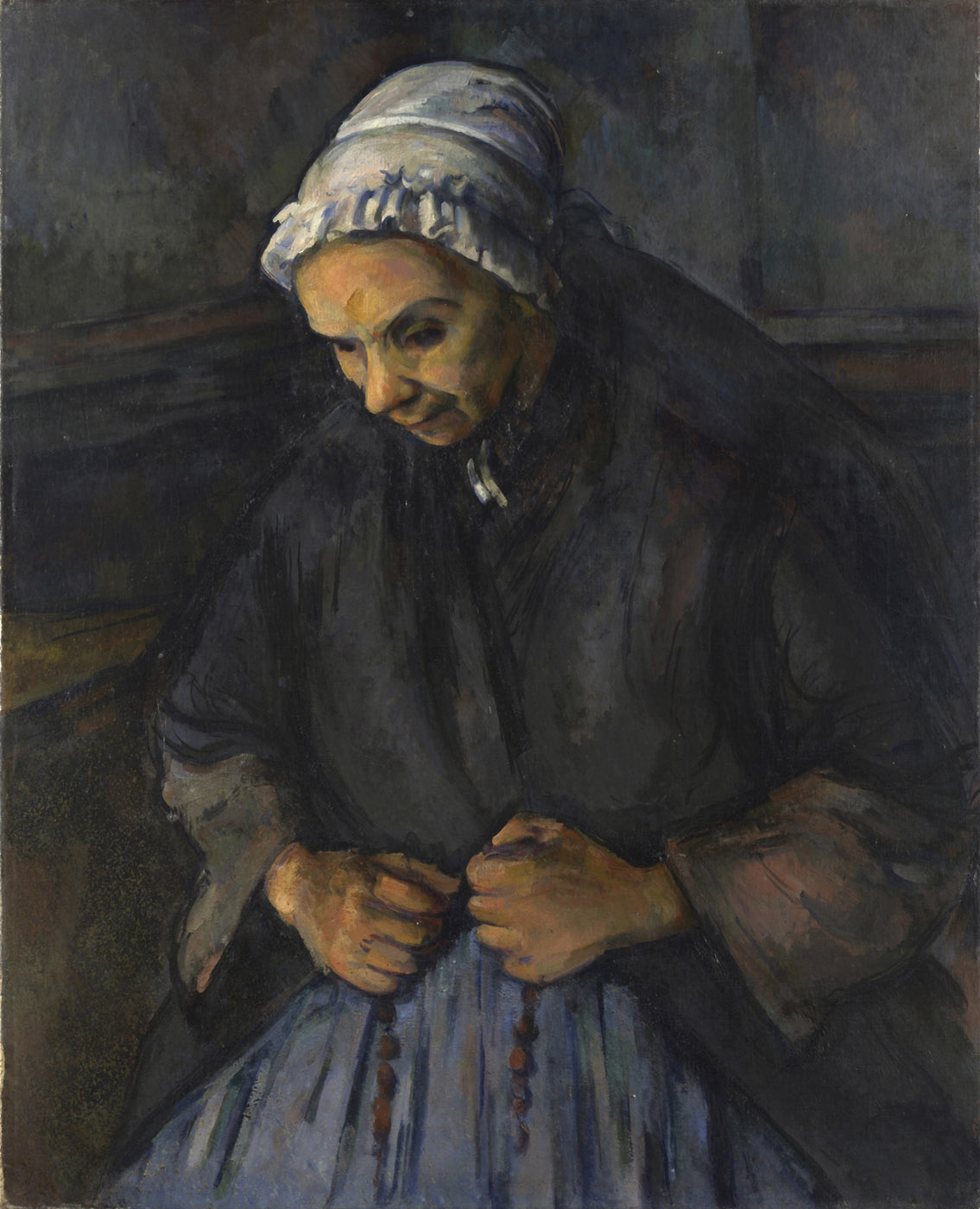
Cézanne never titled this as Anna, and it is not a Bible painting. But it is hard to find a better face for her: an old woman at prayer, entirely absorbed, painted by one of the artists who pointed the way to modern painting, and utterly unglamorous.
The Part Everyone Forgets: The Boy Goes Missing (Luke 2:41–52)
Luke 2 does not stop at Christmas. It jumps twelve years.
Every year the family goes to Jerusalem for Passover. One year, on the way home, they realise Jesus is not with them. Luke explains, reasonably, that they had assumed he was somewhere in the travelling group. It takes them three days to find him.
Any parent who has lost a child in a supermarket for ninety seconds can fill in the emotional gap here.
Finally, after three days they found Him in the temple courts, sitting among the teachers, listening to them and asking them questions.
Luke 2:46 · BSB
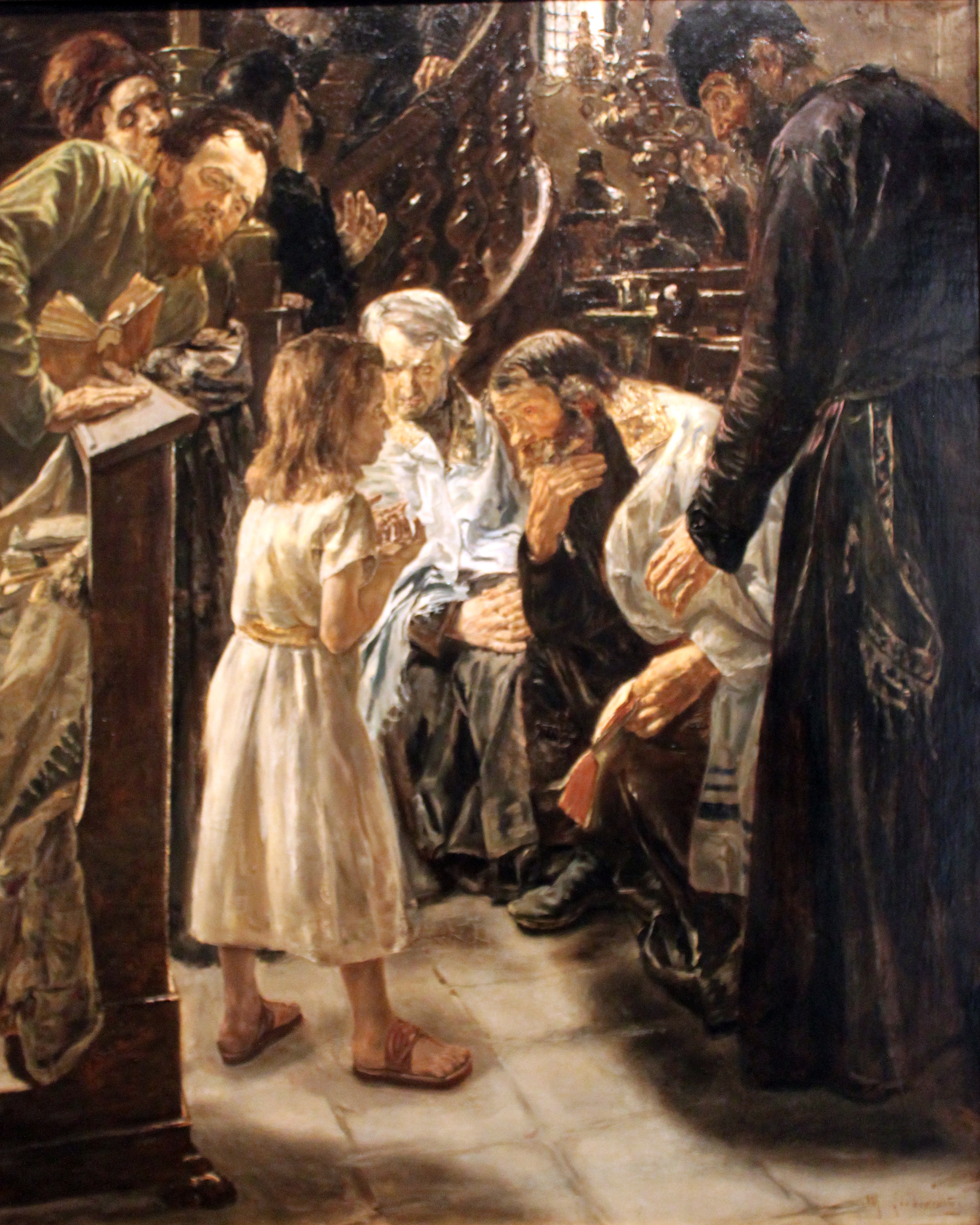
Max Liebermann, a German Jewish painter, made the Jewish identity of Jesus and his teachers central to the scene. When it was shown in Munich in 1879 it caused a scandal, and the attacks on it were openly antisemitic. Liebermann later repainted the figure of Jesus.
The version above is the reworked one. It is worth a slow look, both for what it shows and for what happened to it.
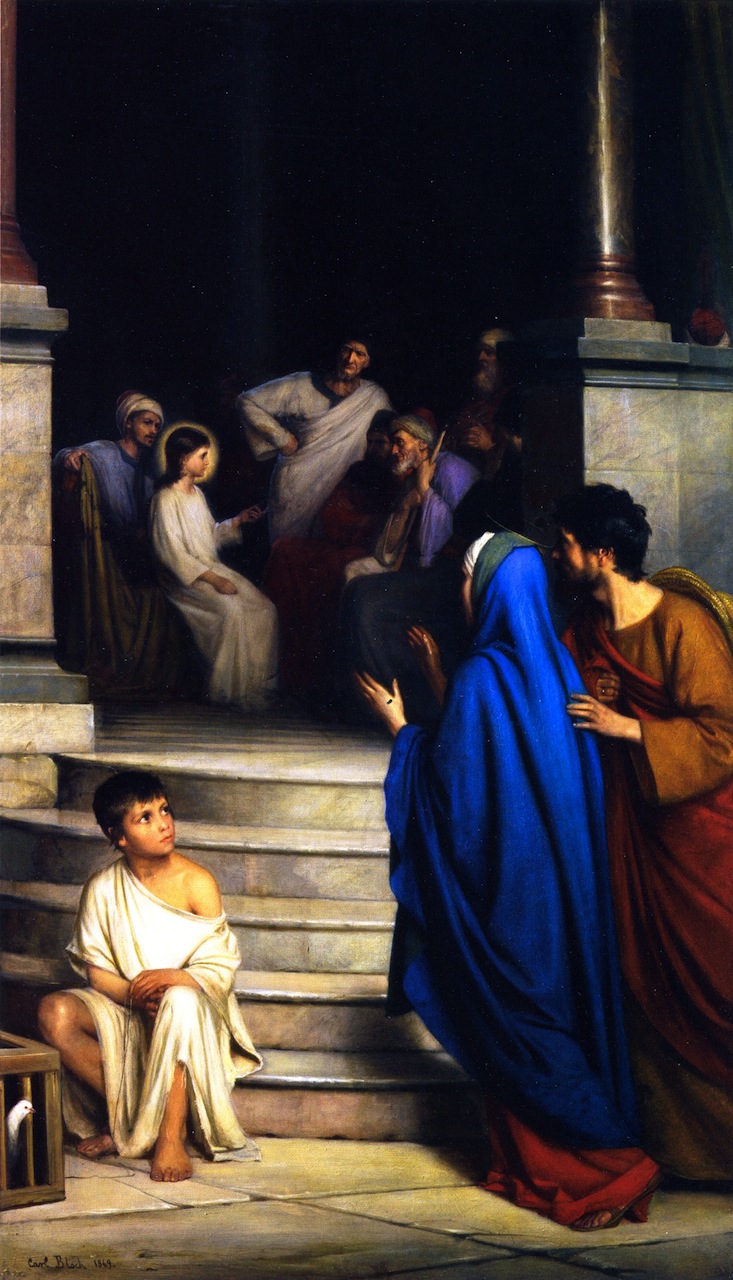
When Mary finally gets to him, she says what any mother would say, and Luke records it without editing:
“Child, why have You done this to us?” His mother asked. “Your father and I have been anxiously searching for You.”
Luke 2:48 · BSB, excerpt
And the twelve-year-old answers with the first words Luke ever gives him — a question right back. “Why were you looking for Me?” he says, and then:
“Did you not know that I had to be in My Father’s house?”
Luke 2:49 · BSB, excerpt
Luke then adds, gently: "But they did not understand the statement He was making to them" (2:50). His own parents. Twelve years in.
So they all go home to Nazareth, and he is obedient to them — and Luke repeats himself on purpose:
But His mother treasured up all these things in her heart.
Luke 2:51 · BSB, excerpt
Almost the same line as verse 19, at the other end of the chapter. Luke bookends Christmas with a woman quietly holding on to things she does not fully understand yet. It is the most human structure in the chapter, and it is easy to read straight past.
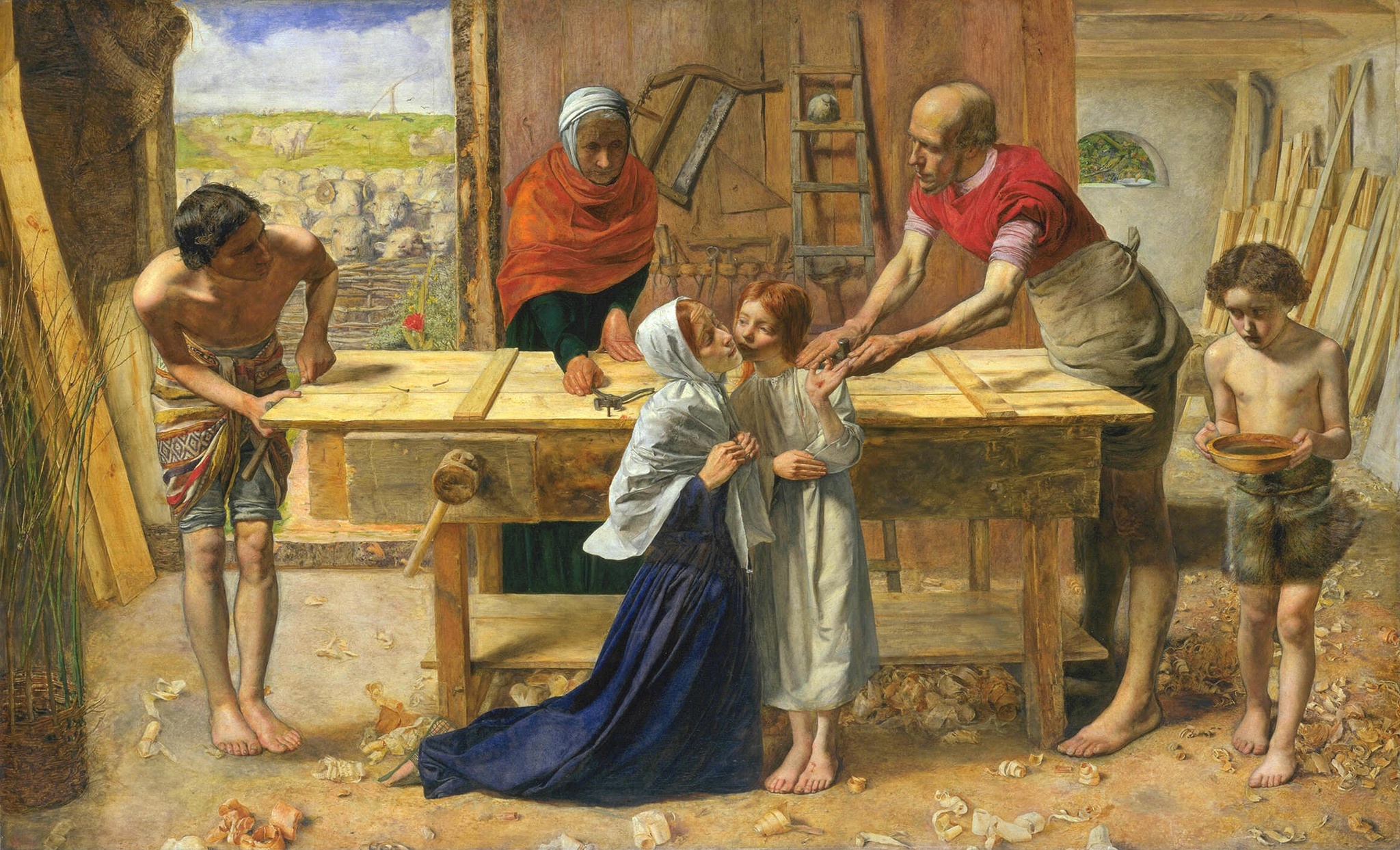
For the Nazareth years, John Everett Millais painted a real working carpenter's shop, down to the wood shavings on the floor. Some Victorian critics hated it. Charles Dickens — yes, the author of A Christmas Carol — attacked it in print in 1850, calling the boy "a hideous, wry-necked, blubbering, red-headed boy, in a bed-gown."
Dickens' complaint, essentially, was that it was too ordinary. Which is a strange thing to hold against a chapter that keeps insisting on exactly that.
The last line of Luke 2 is one sentence about growing up:
And Jesus grew in wisdom and stature, and in favor with God and man.
Luke 2:52 · BSB
The Verses to Remember from Luke 2
Ten lines to keep.
- The manger: "She wrapped Him in swaddling cloths and laid Him in a manger, because there was no room for them in the inn." (2:7)
- The first thing angels say: "Do not be afraid!" (2:10)
- The announcement: "Today in the city of David a Savior has been born to you. He is Christ the Lord!" (2:11)
- The very ordinary sign: "You will find a baby wrapped in swaddling cloths and lying in a manger." (2:12)
- The famous one: "Glory to God in the highest, and on earth peace to men on whom His favor rests!" (2:14)
- Let's go look: "Let us go to Bethlehem and see this thing that has happened." (2:15)
- Mary, twice: "But Mary treasured up all these things and pondered them in her heart." (2:19; echoed in 2:51)
- Simeon, content: "You now dismiss Your servant in peace. For my eyes have seen Your salvation." (2:29–30)
- Simeon, to Mary: "and a sword will pierce your soul as well." (2:35)
- The boy: "Did you not know that I had to be in My Father’s house?" (2:49)
What Luke 2 Is Actually Doing
Read it in one sitting and a pattern shows up. Every time Luke reaches a moment that could be made grand, he makes it smaller instead. The emperor gets one sentence; the paperwork gets more attention than the birth. An army of angels shows up, and the sign they give is a baby in a feed trough. The people told first are on the night shift. The family brings the cheap offering. The two people who recognise the child are Simeon and Anna, an elderly widow. And the chapter ends not with a miracle but with a family argument and a boy going home to do what his parents said.
If you remember one thing: Luke seems convinced that this is how God actually shows up. Not around the edges of ordinary life, but inside it.
Luke 2 at a Glance
- Where we are: the birth and childhood of Jesus, told by Luke — a writer who says at the start of his book that he carefully investigated accounts handed down by eyewitnesses and wanted to set things down in order (Luke 1:1–4).
- The four scenes: the journey and the birth (2:1–7) · the shepherds (2:8–20) · the temple, with Simeon and Anna (2:21–38) · the lost twelve-year-old (2:41–52).
- Who is new here: the shepherds, Simeon, Anna.
- Where the carols come from: "Glory to God in the highest" (2:14), and Simeon's Nunc Dimittis (2:29–32).
- Famously not in the text: the donkey, the stable, the ox, and any mention of angels singing.
Read Luke 2 with a Painting: A 4-Step Visio Divina Practice
Visio Divina is Latin for "divine seeing" — praying with a picture instead of only a passage.
- Look (Visio): Pick one painting above and stay with whatever your eye goes to first — a hand, a face, a source of light. Let it be a slow look.
- Meditate (Meditatio): Read the verse next to it, twice, slowly. Which word catches?
- Pray (Oratio): Say one honest sentence to God. Mary's line is a decent model — she mostly just kept things and thought about them.
- Contemplate (Contemplatio): Sit quietly for one minute. Nothing has to happen.
Questions People Ask About Luke 2
- Was Jesus born in a stable?
- Luke does not say so. He says only that the child was laid in a manger — a feed trough — because there was no room for them in the kataluma, often understood here as a guest room. Many houses of the period sheltered animals under the same roof as the family, so a manger does not require a separate barn. Stables, caves, and innkeepers all come from later tradition and later art, not from Luke's sentence.
- Did the angels sing to the shepherds?
- Luke does not explicitly say they sang. Verse 13 describes "a great multitude of the heavenly host, praising God and saying" the words of verse 14. Singing is familiar from Christmas carols, and a lovely tradition, but Luke leaves the manner of their praise undescribed.
- Who were Simeon and Anna?
- Two people who recognise Jesus at the temple. Luke explicitly describes Anna as elderly; he gives no age for Simeon. Simeon had been promised by the Holy Spirit that he would not die before seeing the Lord's Christ; when he takes the baby he sings the Nunc Dimittis (2:29–32) and then warns Mary that a sword will pierce her soul. Anna is a prophetess, from the tribe of Asher, a widow of eighty-four who never left the temple, and she tells everyone waiting for Jerusalem's redemption about the child.
- What does "swaddling cloths" mean?
- Strips of cloth wrapped snugly around a newborn — completely ordinary care for a baby in the ancient world, and still practised today. Luke mentions it twice (2:7 and 2:12), which is why it becomes part of the sign given to the shepherds.
- Why did Jesus stay behind in the temple at twelve?
- Luke reports what happened, not the reasoning. Jesus is found "sitting among the teachers, listening to them and asking them questions" (2:46), and when his parents find him he answers with a question of his own about being in his Father's house (2:49). Luke adds that his parents did not understand what he meant (2:50), and that he then went home with them and was obedient (2:51).
- What does Luke 2:19 mean?
- "But Mary treasured up all these things and pondered them in her heart" describes her holding on to events she has not yet made sense of. Luke repeats almost the identical line at the end of the chapter (2:51), which frames the whole of Luke 2 with the same image: a mother keeping things she does not fully understand.
Keep Going
The chapter before this one: Luke 1 in Art
The chapter after this one: Luke 3 in Art
If you want to sit with one of these images a little longer, you can restore it yourself. Open Carl Bloch's Adoration of the Shepherds as a puzzle, piece by piece, with the verse and a reflection waiting at the end.
Or get the Visio Divina app for a new painting, a new verse, and a new reflection every morning.
Continue in the open gallery